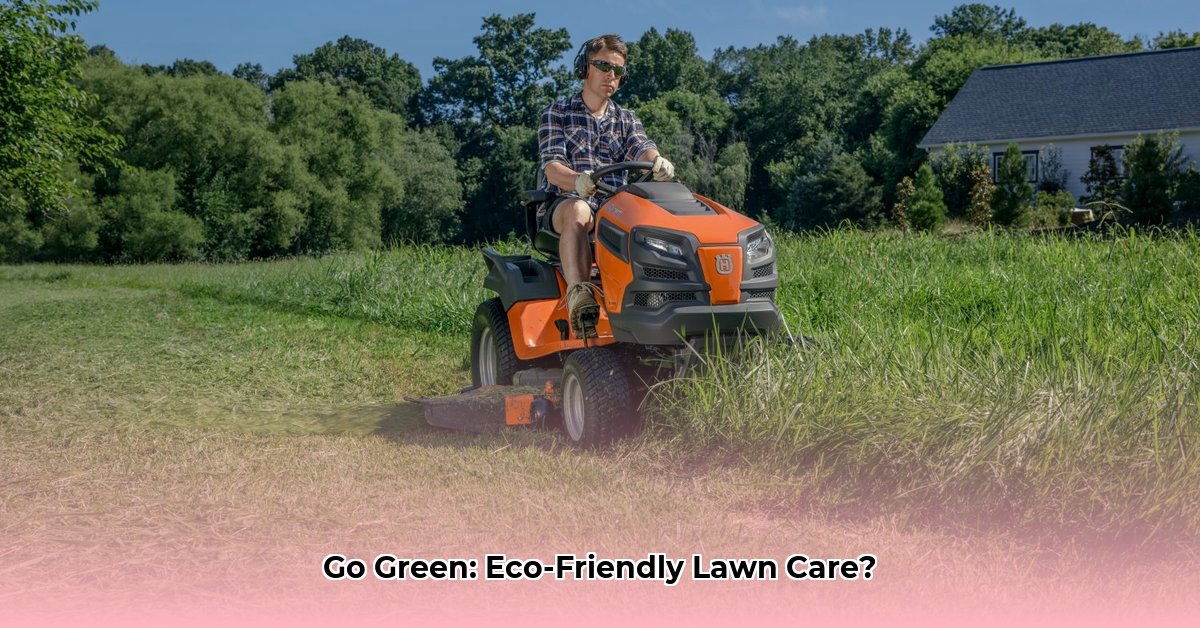
Thinking about a new lawn tractor? Choosing wisely means considering both your needs and the environment. This guide helps you select the most sustainable Husqvarna tractor for your lawn and the planet. We'll compare gasoline, battery-electric, and robotic models, highlighting their sustainability profiles and providing practical tips for eco-friendly lawn care. "Sustainable" encompasses the entire product lifecycle, from manufacture to disposal. For more information on Husqvarna tractors, visit Husqvarna Tractors.
Understanding Sustainable Lawn Care: Beyond the Buzzword
Sustainable lawn care goes beyond simply using less gas. It's a holistic approach minimizing environmental impact across the entire process. Key aspects include:
- Reduced Emissions: Lowering greenhouse gas emissions (like CO2) from operation and manufacturing reduces air pollution.
- Responsible Sourcing: Using materials from sustainable sources minimizes environmental damage during production.
- Noise Reduction: Less noise pollution benefits both you and your neighbors.
- Responsible End-of-Life Management: Easy and responsible recycling or disposal of the tractor minimizes waste.
Husqvarna Tractor Options & Their Sustainability Profiles
Husqvarna offers various tractor types, each with distinct sustainability implications. Let's compare them:
Gasoline-Powered Husqvarna Tractors: The Traditional Choice
Pros:
- High power and performance, ideal for large properties.
- Generally lower initial cost.
- Established maintenance and repair infrastructure.
Cons:
- High greenhouse gas emissions during operation. Does this impact your decision?
- High noise levels.
- Reliance on fossil fuels contributes to climate change. Did you know that gasoline-powered tractors use approximately 1 gallon of fuel per hour of operation?
Best For: Homeowners with large lawns and limited budgets, prioritizing power and affordability. Landscapers handling major projects may also find them suitable.
Lifecycle Considerations: Manufacturing and disposal create emissions. Proper recycling of engine components is crucial to minimize waste.
Actionable Recommendations: Regular maintenance extends lifespan and reduces fuel consumption. Opt for HVO100 biodiesel (a renewable fuel) if available in your region. Responsible disposal is critical.
Battery-Electric Husqvarna Tractors: The Quiet and Cleaner Alternative
Pros:
- Zero tailpipe emissions during operation—a significant advantage for cleaner air.
- Significantly quieter operation compared to gas models.
- Reduced reliance on fossil fuels.
Cons:
- Higher initial cost compared to gasoline models.
- Limited runtime based on battery capacity; you need to plan charging time around your mowing schedule.
- Charging infrastructure is needed. The batteries themselves have an environmental impact during production and disposal.
Best For: Homeowners with smaller to medium-sized lawns who prioritize quiet operation and a reduced environmental footprint. Access to electricity is essential.
Lifecycle Considerations: Battery manufacturing has an environmental cost; however, battery technology is constantly improving and recycling options are developing.
Actionable Recommendations: Optimize mowing routes to maximize battery life. Regular maintenance is crucial for optimal battery performance and extends the tractor’s lifespan. Proper battery recycling at end of life is essential.
Robotic Husqvarna Tractors: Automation Meets Sustainability
Pros:
- Fully automated operation offers ultimate convenience.
- Minimal user intervention.
- Very quiet operation.
- Lower emissions compared to gas-powered tractors, especially if charged using renewable energy sources.
Cons:
- High initial cost.
- Suitable for smaller, relatively flat lawns. Uneven terrain might present challenges.
- Requires careful setup and boundary wire installation.
Best For: Homeowners with small, flat lawns who value convenience and minimal effort.
Lifecycle Considerations: Similar to battery-electric tractors, battery production and disposal are key considerations. Responsible recycling of electronic components is vital.
Actionable Recommendations: Regularly maintain the blades and cutting deck to optimize performance. Proper battery disposal is essential.
Beyond the Tractor: Sustainable Lawn Care Practices
Even with the most efficient tractor, supplementary sustainable lawn care practices significantly reduce environmental impact:
- Mulching: Return grass clippings to the lawn as natural fertilizer to minimize waste and reduce the need for chemical fertilizers.
- Reduced Fertilizer Use: Use fertilizer sparingly, only when needed. Choose organic or slow-release options to minimize water pollution and improve soil health.
- Water Conservation: Water deeply but infrequently to encourage deep root growth, reducing water waste and runoff. Consider using a rain barrel to collect rainwater for irrigation.
Conclusion: Making an Informed Choice
The best Husqvarna tractor for you depends on your property size, budget, and sustainability priorities. Weigh the pros and cons of each type, considering the entire product lifecycle. Remember that responsible use, maintenance, and disposal are crucial aspects of sustainable lawn care. By adopting these practices, you can contribute to a healthier environment while enjoying a well-maintained lawn.